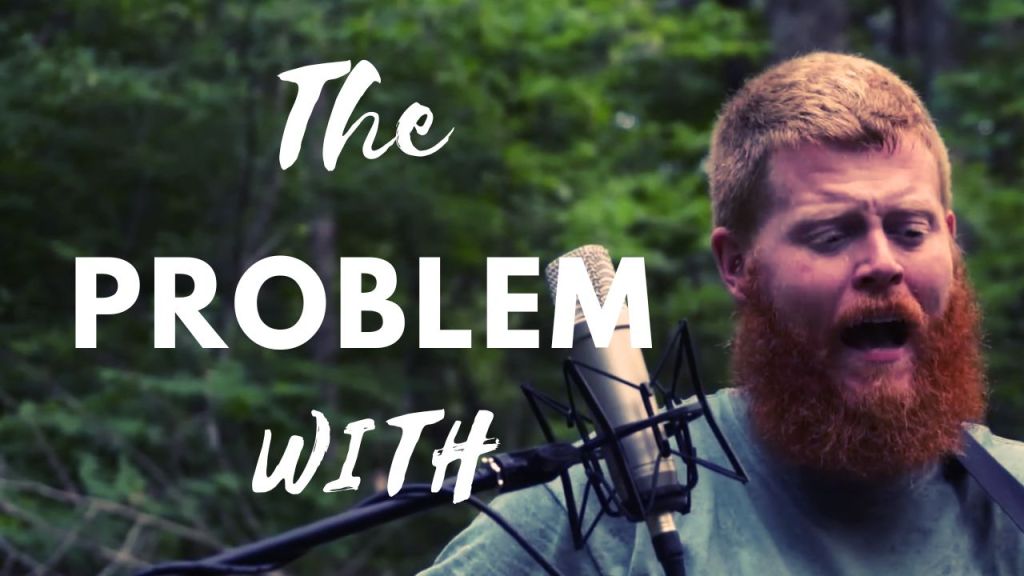
Thoughts on the viral star
At this point, I’m sure that Oliver Anthony needs little introduction. Following the success of his omega-viral hit, “Rich Men North of Richmond,” Anthony has become an overnight sensation. The video currently sits at 60 million views and has united millions of people from all races, creeds, and even countries with its message of working class disillusionment and despair, spawning, in the meantime, various covers and remixes, not to mention commentary. Anthony himself appears to be a down to earth, honest, working class guy who loves his wife, reads the Bible, and wants to rescue abused pets. So how on earth could anyone have a problem with Oliver Anthony?
Well, to explain that, I’ll need to talk about The Network.
In the 1970s classic, The Network, a depressed and aging news anchor, Howard Beale, shocks his viewers one evening by announcing that he’s going to commit suicide on air a week from that night. He’s quickly suspended, but one of the top brass is a good friend of Howard’s and he’s given one last chance to redeem himself and say goodbye to the audience that he’s loyally served for so many years.
Instead of a goodbye though, Howard unleashes a rant to end all rants, a blistering denunciation of the whole system from top to bottom, that is so powerful and compelling that by its iconic ending, when he tells whoever is watching to go to their window and shout into the night air, “I’m mad as hell, and I’m not going to take it anymore,” hundreds of thousands of people, maybe even millions, get up and do it. For one glorious moment, the abused masses are able to articulate their fury in a single voice. And the political landscape seems drenched with possibility.
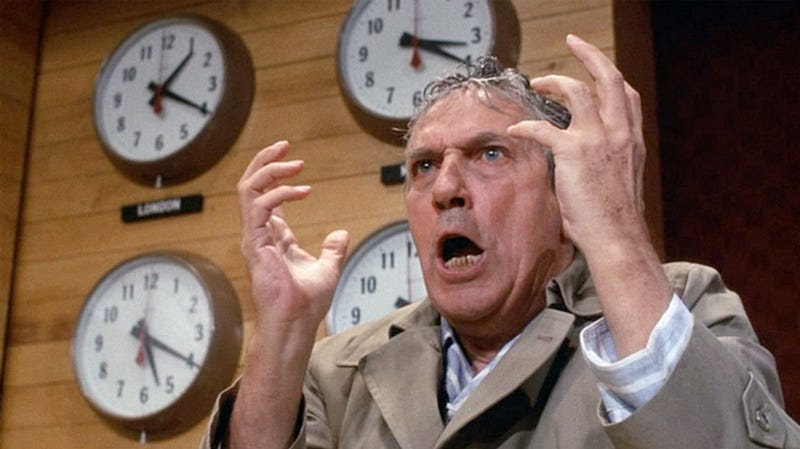
A hotshot up-and-coming network exec smells an opportunity, and Howard, despite seeming to be a liability, is given his own show, where a few nights a week, he gives similar sermons. The numbers are crazy. The show is a massive hit.
However, it eventually becomes clear that Howard’s radicalism is actually almost entirely harmless. He isn’t a lightning rod; he’s a steam release valve discharging the discontent of masses into the safe channels of entertainment. All his bluster, all his fulminating against the system is harnessed by that very system and turned into yet another commodity from which to profit. The show becomes a hollow exercise in futile fakery and eventually Howard is gunned down by a couple of terrorists who are, in their own way, equally fake, the entire fiasco serving as a kind of monument to this world of empty spectacle.
Network is rarely very far from my thoughts, but it has been especially close ever since I heard “Rich Men North of Richmond.”
I have to admit that I really love this song. It’s so raw and powerful that it almost feels like you’re listening to a force of nature rather than just some guy. The viral quality of the song was absolutely astonishing, and there is absolutely one reason for it: the lyrics. Don’t get me wrong, Anthony is a fine singer, and the song is very well written (at least from my understanding), but that alone would not have gotten it to where it is.
Joe Rogan would later comment that if the song had been about love, nobody would have had a problem with it. He’s not exactly wrong, but in saying so, Rogan proved that he simply doesn’t get it. If that song had been about love, nobody would have cared and it would be sitting at a few thousand views on YouTube.
No, what people cared about was the message, a message of profound disillusionment and outrage. It was the power of that message and of the artistry of its articulation that blew up. And for a few brief days, Oliver Anthony was simply the voice of “Rich Men North of Richmond,” an avatar and manifestation of the very rage and sorrow that his song had so effectively harnessed.
Naturally, there were any number of commentators who were driven to digest “Rich Men North of Richmond” into their political or moral paradigm, either positively or negatively. There was largely positive reception from the Right, and mostly negative reception from the Left, with the most terminally brain-rotted calling the song “confederate apologia.”
But most of the positive attention the song had received obviously came from regular people, people who in general have no powerful political feelings of any kind, but with whom the anguish of the song resonated. By some bizarre happenstance, the disaffected classes all across the world had their attention roused and focused on this man, this song: the voice of Oliver Anthony.
And then, slowly, we were introduced to Chris.
There were those first few interview clips. And then that regrettable car video — for the love of God when will this stop being a thing? — and finally his interview on Joe Rogan. And with each, things got a little more disappointing.
I came to learn that Oliver Anthony was not the man’s real name (that would be Chris Lunsford) and was instead the name of his late grandfather who had lived through the Great Depression and was apparently the kind of man that I had imagined Chris was when I first watched that video of him singing in the woods with a few hounds lazing about in the grass beside him.
That’s ok, though. People have a right to be who they are.
And then Chris started trying to sanitize the message of the song, the very thing that had made it a hit to begin with. In the video filmed from his truck, he claimed that it had been “weaponized” by the different political parties but that it was “a lot bigger” than any of that. And sure, there’s part of that sentiment that I can appreciate. Our current political scene is simply depressing and our current political language is straight-up broken, but here’s the thing: those problems that he sang about have solutions and they are political solutions. Yes, sure it’s all good and well to read a Bible verse and explain how if we could all just adhere to that sentiment a little more closely, things might start looking up, but as soon as you start to ask WHY that doesn’t happen, you’ve taken your first steps back towards politics.
When you want to talk politics, you talk about what you have. What’s the situation on the ground? Old slave spirituals don’t discuss politics, rather they were addressed to God and the hope of a better life in the hereafter because the idea of political liberation seemed utterly impossible. But for Chris to try to depoliticized his own obviously political song is pretty suspicious, especially when there are currently existing political movements dedicated to addressing the exact complaints that he makes in his song.
Like, imagine Harriet Beecher Stowe saying she didn’t want Uncle Tom’s Cabin to be “weaponized” by the abolitionists.
What do you even mean when you say it’s been “weaponized,” Chris? Wasn’t the whole point of this song to be a weapon of sorts? Chris has admitted in interviews that this song is written in the style of an anthem. What do you think an anthem IS, Chris? You could at least have enough boldness in your convictions to speak them as clearly as you did in this song. But when it came down to explaining those convictions, the message seemed to get lost in vague platitudes about how Chris’s political project is “way bigger” than all of the current political “buckets.”
Saying that his song is about something bigger than all current political projects sounds deep. It makes Chris sound like someone who’s just above all the petty squabbles of politics. But it’s precisely because it sounds deep that it can be a mask for something extremely shallow: the simple desire to stay out of the fray, a lack of any real ideals or convictions.
It all clicked for me when I heard Joe Rogan asking, “Why can’t people just accept it as a great song?” Joe would like it if the song were to be denuded of all its social and political significance. Chris’s song became a hit because it was an anthem, but here Joe is saying that those people who treated it as such were simply mistaken: it was only an entertainment product. Sure, it sounded like something that ought to mean something. It sounded like the cry of millions of wounded and despairing people, but that was just good artistry. Now it’s blown up across social media with all kinds of people making various spin-offs or covers and do you have any idea how much money this song has generated? Do you have any idea what these numbers translate to in USD? Want to guess how much of that money is going to any of the people that felt that mournful cry?
What Joe is, in essence complaining about, was that there are people who are not satisfied with the endless ocean of fakeness that is modern consumerism. Maybe that’s also the reason that it was so disappointing to hear Chris talking about his career and his music, discussing songwriting techniques and the ins and outs of the industry as skillfully as any Californian, and realizing that Chris is just a musician.
For him, this song blowing up just means he’ll get the career he always dreamed of. And I guess that’s fine. I love music as much as the next grown adult. And Chris is allowed to be just a musician, even if I do find something sleazy about how he got there by affecting the sincerity, persona, and politics of his late working-class grandfather and using them to amass great personal wealth while doing nothing for the causes he claims to support.
Final Thoughts
Being a cynic means being right way more than you would like to be. And maybe Chris will prove me wrong, and I would like much for that to happen. I know in some of his more recent interviews, he’s expressed some dissatisfaction with the idea of simply being another commodity on the market, so who knows?
But I think it’s more likely that this song will be another flash in the pan, launching the career of another, more or less, stock standard country singer. But if there is any greater meaning to “The Rich Men North of Richmond,” I think it would have to be the way that for a moment, it showed just how much desire there is in this country and indeed across the world, for something else, something more, something worth believing in.
There was once this dream of the warrior poet: the man (though it could also be a woman) not only gifted with profound vision and the ability to express that vision with artistic power, but also possessing the spirit to fight to make it reality. Chris captured that dream, almost by accident, because of his artistry, but it seems like it was just a LARP. I suspect that he’s more concerned with how he will manage his music career than contributing to any meaningful change. But still, somehow I feel like we’re moving closer to something. The Chris Lunsfords may continue to come, but I think we’re getting smarter, a little quicker at sniffing out the pretenders and those more motivated by self-interest than idealism. And who knows? Maybe one fine day…?
But until that day comes, at least we can be sure of one thing: there will always be music.
 The Barking Years
Leave a comment