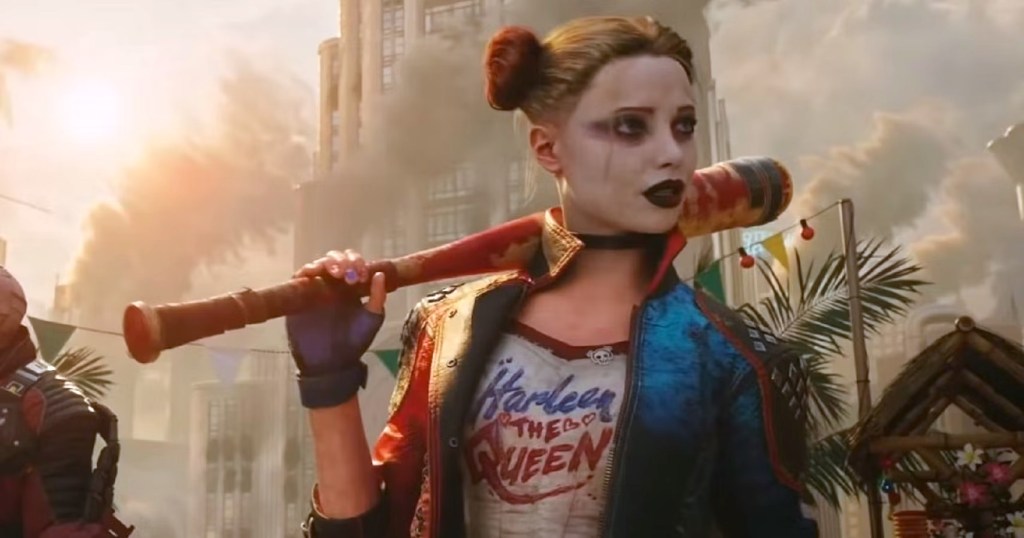
Of the controversy that’s been drummed up by the recent release (after nine years of development) of Suicide Squad: Kill the Justice League, a good deal pertains to the fact that it is simply a bad game. Repetitive design, cynical cash-grabbing features, even more cynical time-wasting features; it is a smorgasbord of anti-consumer schlock. Most people are in agreement on that count. However, the one way in which it does excel is the story and the cutscenes, which are shockingly well-realized with writing that is probably as good as your typical Marvel movie at this point. Unfortunately this leads us smoothly into the second half of the controversy.
It is in some way refreshing that a game called “Kill the Justice League” doesn’t shy away from its title. You truly do kill the iconic heroes of the DC comic book universe, a fact which has enabled any number of people whose IQ’s might be mistaken for settings on a thermostat to blubber endlessly, “It’s right there in the title. What did you expect?” as if this were the end to any debate on the subject.
The reason that there is a debate on the subject, is not just because there is something significant about a piece of media being made for mass consumption which depicts the tearing down of popular and longstanding cultural heroes. But there is also something about the way in which they are torn down that feels even more significant.
Much has been made of the death of Kevin Conroy, who voiced and brought to life the Batman of Arkham Asylum universe/story line, and the way that his Batman is unceremonious executed at the hands of Harley Quinn. As he sits, bloodied and beaten on a park bench, drifting in and out of consciousness, Quinn actually reprimands him for all the “mental and emotional damage” he’s caused in his crusade to make the world safer. How about all the lives he’s saved, you stupid git?
Is it even worthwhile to point out that the person delivering this screed is a mass murder? What is maybe more interesting is the way in which this very stupid speech intersects with a good deal of recent discourse about the hero, which has sought to “deconstruct” (read “undermine”) his heroic status. It was even hinted at in the recent Flash movie in which, while touching Wonder Woman’s lasso of truth, Batman reveals that he is aware that if he really wanted to help the city, he’d simply donate all the money that he spends funding his crusade to social services..or something like that anyway–I’ve forgotten more of that movie that I ever wanted to know about it.
What is even more revealing is the way that the game handles the death of the Flash. The reason for the destruction of the Justice League is based on their having been mind-controlled by a powerful villain, and in the Flash’s case, players actually get to see him before and after this mind-control has been established. Before being mind-controlled, he actually saves the lives of the Suicide Squad. Later, after fighting and ultimately defeating him, the Suicide Squad approach the body and one of them (the stupidest one) says something about honoring a fallen hero. Instead of doing this though, Captain Boomerang begins urinating on Barry’s corpse. But it gets worse. Another character, Deathstroke, tries to intervene, telling Boomerang to show some class, but is stopped when he notices the size of the CB’s dick. Deathstroke is so impressed that he congratulates Boomer and Harley Quinn even salutes his cock. And the scene ends on a note that is supposed to be—I’m just guessing here; the tonal whiplash is so jarring that it makes you wonder the writers are simply bipolar—comic.
A lot of commentators have been left scratching their heads about how to respond to all of this. Current sensibilities have left them with few tools for really addressing the problem and so we see them attempting to use other tools in ways that make everyone look like an idiot. This is how you get people attempting to explain that the real problem with this moment is that Boomerang’s character hasn’t been properly built up in a way that justifies it. This falls comfortably in line with the longstanding tradition of employing self-congratulatory midwit level artistic criticism to works of current media in a way that makes people drool over themselves in the comment sections talking about how they too have heard of character development or “show don’t tell.” But it doesn’t really get to the heart of the issue, does it?
The idea that this moment would have been made acceptable if Boomerang had simply had more scenes establishing him as the kind of asshole who would do this is…uh…well it’s almost like people have forgotten again that these people are mass murderers. How does this keep happening?
Nonetheless, the reason for these bizarre mental contortions is that the thing that people want to say is the there is something morally repugnant about this scene, however, they can’t do that because it is unspeakably gauche. One can only imagine the torrent of “holier than thou” accusations which would immediately bombard the speaker. Our culture doesn’t respect moral reprimands. But it respects “art” by which it really just means “entertainment,” so what we get are criticisms that are meant to be moral criticisms masquerading as artistic criticism. But, even if won’t find popular appeal, I think it’s worthwhile to state the problem with this game in accurate terms, and this means employing moral language.
In his book My Life Among the Deathworks, cultural critic and scholar Philip Rieff explained deathworks as (primarily) artistic works that are meant as a kind of aesthetic assault on what is held sacred within a culture.
As Rieff himself explained, a deathwork is
“an all-out assault upon something vital to the established culture. Every deathwork represents an admiring final assault on the object of its admiration: the sacred orders of which their arts are some expression in the repressive mode.”
The go-to example is Andres Serrano’s infamous photograph Piss Christ (1989), in which he photographed a crucifix submerged in a vat of his own urine. (Yes, I am aware that Serrano claims to be a Christian (a claim on which I won’t speculate) as I am aware of the tendency of artists to spew pseudo-intellectual jargonized gibberish whenever it comes to the things they do. In fact, this might be the relevant aptitude in the “fine” arts world since creating anything pleasing to look at, let alone inspiring appears to be completely absent from the menu—insert longstanding recommendation that every human read Tolstoy’s brutal take-down of the whole enterprise in What is Art?)

Considering the actions of Captain Boomerang (there is something innately undermining about having to write anything even remotely serious about people with names this stupid), Piss Christ is doubly appropriate. A deathwork is not an argument; it does not make a case through logic or syllogism. Instead, it makes the sacred appear ridiculous, refusing it the dignity which it ought to be given, and simultaneously undermining and subverting the moral underpinnings associated with it. The goal is to alter the associations, tastes, and attitudes of the audience.
Suicide Square: Kill the Justice League is, itself, not shy about the fact that this is what it’s doing. Quinn’s statement about it now being “their turn” to run things is incisive. And there is something innately subversive about using villains to unceremoniously slay heroes, even without the gleeful cruelty. Of course there are always those ready to offer the zombified objection “just because the game developers make you do something doesn’t mean that they are saying that it’s morally good.” I call it zombified because it is as braindead as it is un-killable. Anyone with the slightest degree of media literacy (not to mention an inkling of a clue about human psychology) can immediately understand that the audience is intended to identify with the villains. It is unbelievably obvious. The point is not to make an explicit claim that what is being witnessed is RIGHT. Then the claim is in the open where it can be cut down easily. But that isn’t how any of this works. The point is to open up space for people to begin questioning whether or not it is innately WRONG.
What makes the whole ordeal so annoying for anyone who understands it is that we have to pretend that this is an argument over whether or not Suicide Squad: Kill the Justice League is simply a good or bad entertainment product, as if there was nothing more important to consider. But if we could ever get past this silly hurdle, if we could begin identifying this game and other similar media products as deathworks, well then the arguments become very easy.
At this point I can imagine one particularly predictable objection and it goes something like this: “It’s just a video game, bro. Why do you care?”
For as long as I can remember, this has something of a trump card online, a bit of rhetorical jiu-jitsu which works by using the outraged party’s outrage against them. The implication is that to care about something like this is so trivial that it must mean that the person making the objection is trivial. It’s meant to make the objection look histrionic, hysterical even, by suggesting that if you were cool, you’d realize how insignificant this issue is and move on to something worth your time. It’s similar to the “why you mad, bro?” rebuttal, precursor to the “Ratio.” It’s a way of leveraging the optics of social ostracism. Appropriate that so many of the accounts that got big by using this strategy did so by leveraging thousands of bots to intimidate real humans.
First, I don’t care about a video game. I could give a shit about any of its video game mechanics, and it is highly unlikely that I will spend a single second of my life playing it. What I care about are stories, because I recognize that stories are how human beings understand reality and the types of stories that get told will lay the groundwork for the future. I’m also not suggesting that anyone should get upset upset about this. The internet snarker is at least partially correct that the level of outrage a person brings to this issue should have some proportion. And it’s a little undignified to get very upset about comic book characters. All that’s needed is to point out what is happening, to recognize that this is a moral issue and to stop being nervous about framing it in this way, even if it will draw some jeers from the peanut gallery.
As it happens, through long experience, I’ve discovered that the “why do you care, bro?” individual is exactly the kind of person likely to invest hundreds, even thousands, of hours into a game just like Suicide Squad. In other words, this person probably cares very deeply about things far more trivial than the person they are responding to, and this phony superiority is just the smirk of a sated hedonist. This person will never be concerned about anything unrelated to their own individual pleasure-seeking, and this makes them, culturally speaking, dead weight. The ideal response to this type of criticism is a separate kind of superiority:
“You wouldn’t get it, bro.”
 The Barking Years
Leave a comment