
The pursuit of meaning isn’t a weekend retreat
My undergraduate degree was in philosophy, and early in my coursework, I took a class on Kant’s Critique of Pure Reason. Naturally, we didn’t read the whole thing. It’s massive. But our professor, who was an Aussie and who, every time he said Kant’s name, sounded as if he was saying “cunt,” did make sure that we left the class understanding that Kant’s major contribution to philosophical thought had been the discovery of a priori intuitions.
According to Kant, before we can understand reality, we must first understand the tool that we use to study reality and the ways in which that tool, that perceptual apparatus, may impact any attempt to understand the noumenal world, or the world as it exists apart from human perception. I’ll leave off with any more detail than that as it’s pretty heady stuff, but I recently read a very interesting article by Catherine Shannon called “Everyone is Numbing Out,” and it seemed relevant.
In her essay, Catherine discusses the issue of people using ironic detachment and posturing in order to numb themselves to their own lives. For anyone who knows me, this is all very much my wheelhouse, but I was especially interested in something Catherine said towards the end of the piece. Forgive me, as it’s a long quote, but I feel that it’s worth including in its entirety.
We can’t keep going down the path we’re on, but we also can’t go back. Don’t worry, I’m not going to give full-throated endorsement for Post-Post-Irony, or David-Foster-Wallacian New Sincerity, as he does in the essay I quoted earlier (though I do think cringe sincerity is preferable to total apathy). We’re too far gone from the early 90s. We can’t put the internet back in the box or log off forever. Too much of our lives is irrevocably online, we’re all too self-aware, and a saccharine glaze of sincerity is too affected to feel real. Besides, we’ve all been cornered by the guy at the bar with a well-worn paperback in his pocket who locks eyes with you and whispers, “But how are you, really?” as if it’s a profound question. I would hate to subject anyone to such an encounter.
It’s interesting that after saying this, the remainder of Ms. Shannon’s essay seems very much like what I would expect a conversation with this sincere, paperback-wielding weirdo to look like, so, in that regard, I don’t want to be too harsh on her. But I found this moment to be very revealing. After having boldly and skillfully diagnosed the problem, Catherine becomes surprisingly timid, and in a way that suggests that she is trying to placate her audience. She’s surely reacting to something real here, and it’s worth trying to understand this impulse because I’ve grown pretty tired of hearing people say “we can’t go back” when “going back” apparently just means behaving like the entire catalog of human beings prior to about fifteen minutes ago.
Look.
I have never cornered anyone at a bar or asked them how they are “really.” And though I’m usually sporting reading material, it’s rarely small enough to fit in a pocket, and I guarantee I don’t want to discuss it with a stranger. But I have infinitely more sympathy for the guy who is at least trying to cut through the bullshit, than the person who’s just sad that they’re aging out of it. And, I’m also thinking that “how are you, really?” actually is a profound question since it’s the same question that you’ve devoted this essay to talking about. And cringe or not, that guy has it right because, to alter a phrase, at least he’s trying to hit bottom.
Let me explain where we are. We are that stage in this discourse where there is some social cachet in pointing out the problem, and zero actual interest in solving it because the problem is embedded in how our culture grants status and approval within interpersonal interactions. And honestly working towards or experimenting with solutions to that problem puts you on the wrong side of current cultural sensibilities. I call this the Cool Kid Panopticon. Well, I call it this as of about five minutes ago, but I think you have to admit that it’s pretty catchy.
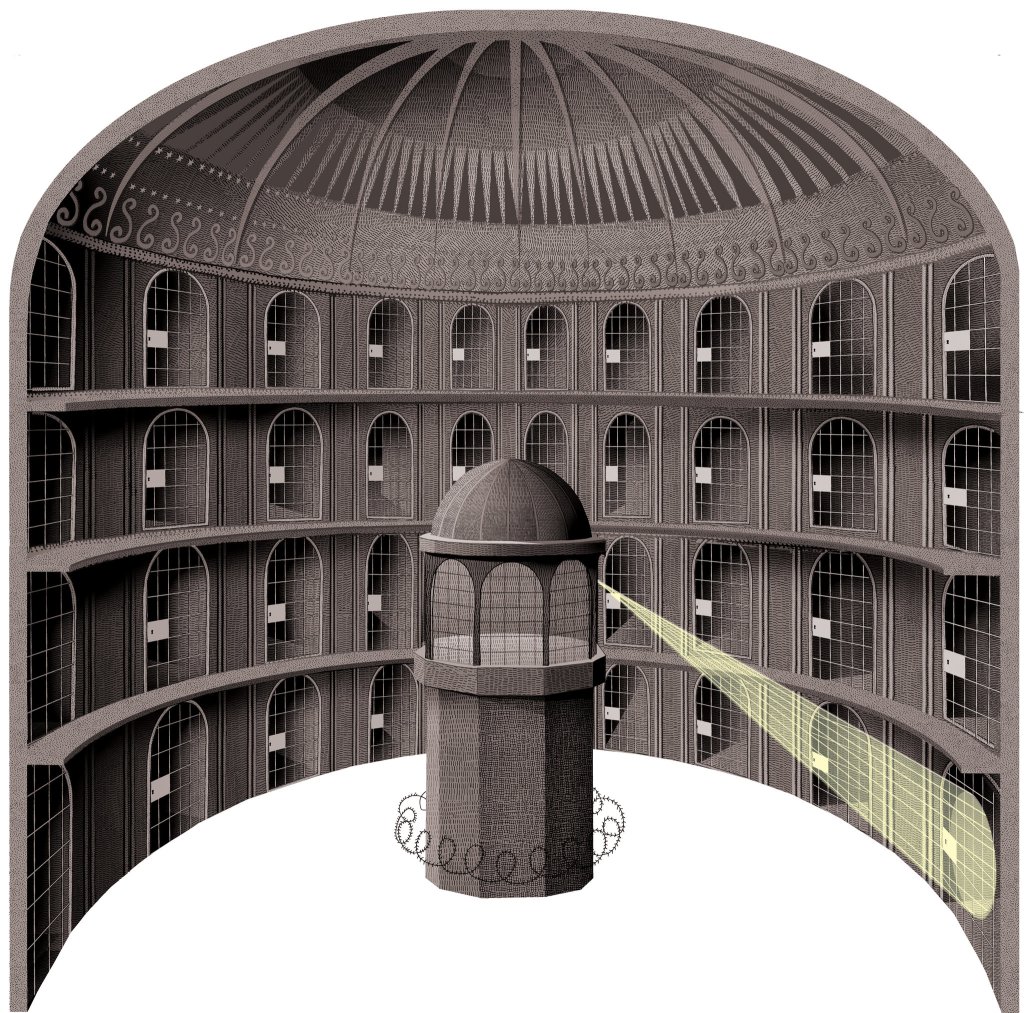
We all recognize the failures of our culture, particularly its failure to provide fulfillment for our lives, but, for the most part, we are still invested in that same culture so that whenever someone actually makes any serious attempt to escape it, we’re there like a bunch of ankle-biting yips to point out how “cringe” or “lame” that dude is.
Are you serious? An actual paperback book? Are you kidding me, my guy, my sweet summer child?
That’s why, when Catherine decides she wants to walk back from the ledge, she resorts to language that essentially indicates that the solution is uncool. We can’t do sincerity because then we’d be like that guy in the bar and we’ve already agreed that guy is cringe. But hold up–haven’t you also already agreed that the cultural perspective that you’ve used to form this evaluation is a sterile, life-abdicating blind alley? For someone complaining about irony-poisoning, it’s unfortunate that she doesn’t see the irony that she is trying to criticize a culture while simultaneously enforcing its standards. We’re willing to admit that something is very wrong with our culture, but we’re still using the perceptual framework of that culture to evaluate solutions.
In many groups of Alcoholics Anonymous, there is a frequently spoken rule for newcomers:
Unless you are talking about the ways in which you have destroyed your life and need help, SHUT THE FUCK UP. Literally no one on this planet needs to hear the opinions of someone who cannot even run their own life.
It may sound harsh, and newcomers are frequently rankled by it, but the longer you stay sober, the more sense it makes. Unrecovered addicts are superfactories for the production of bullshit, and numerous young AA groups get suffocated in the miasma of delusion that inevitably results if they are consistently allowed to have the floor. In order for groups to survive and be useful for the people who need them, there has to be a recognition for a total break with, yes, your previous ways of behaving, but also your previous ways of thinking.
In these circles, I hear constantly that “there’s no going back” or that you “can’t put the postmodern cat back in the bag.” Let me be absolutely crystal clear: any solution to our current problems is going to involve putting that cat back in that fucking bag. If that can’t be done, then just pack it in. If that can’t be done, then the whole human project as it has been envisioned since before Christ has officially capsized and all this talk about antidotes or solutions is just a cope that we are currently employing to lull ourselves into acceptance. It’s sudoku. It’s Candy Crush. It’s the Sunday crossword puzzle. It is trivial pablum that we use, not to embrace the truth, but to avoid it. Speaking of, I think it’s worth quoting Ms. Shannon one more time:
Rather than jump to sincerity, I’d like to start with basic honesty. It would be great if we started just telling the truth — to ourselves and each other. The truth is good. (I mean the truth, by the way. Not “our truth.” The truth, the real truth, does not have to market itself as “authentic,” like an influencer does, it simply is.) In other words: stop hiding and start seeking. Stop hiding from the sad truths and start seeking the transcendent truths that will address the sadness. When we flip the game of hide-and-seek, we can stop worrying about someone finding us, and start seeking the truth in the world, in others, and in ourselves.
If Catherine wants honesty and for people to tell the truth, as she says she does, this is that truth: any honest seeking will have to begin with flying a permanent middle-finger to Cool Kid Panopticon. Why should you care? Let the dead bury their dead. If you were somehow transported to the deck of the Titanic circa 11:30 pm on the 14th of April, 1912, would you really give a shit about what people thought of you as you were bolting for the lifeboats? This ship is not going to be saved. It’s going down. Not right away of course. There’s still a lot of margin for the people on the upper decks, but those lower decks are already filling up with seawater.
 The Barking Years
Leave a comment