A Short Review
I have mixed feelings about this book.
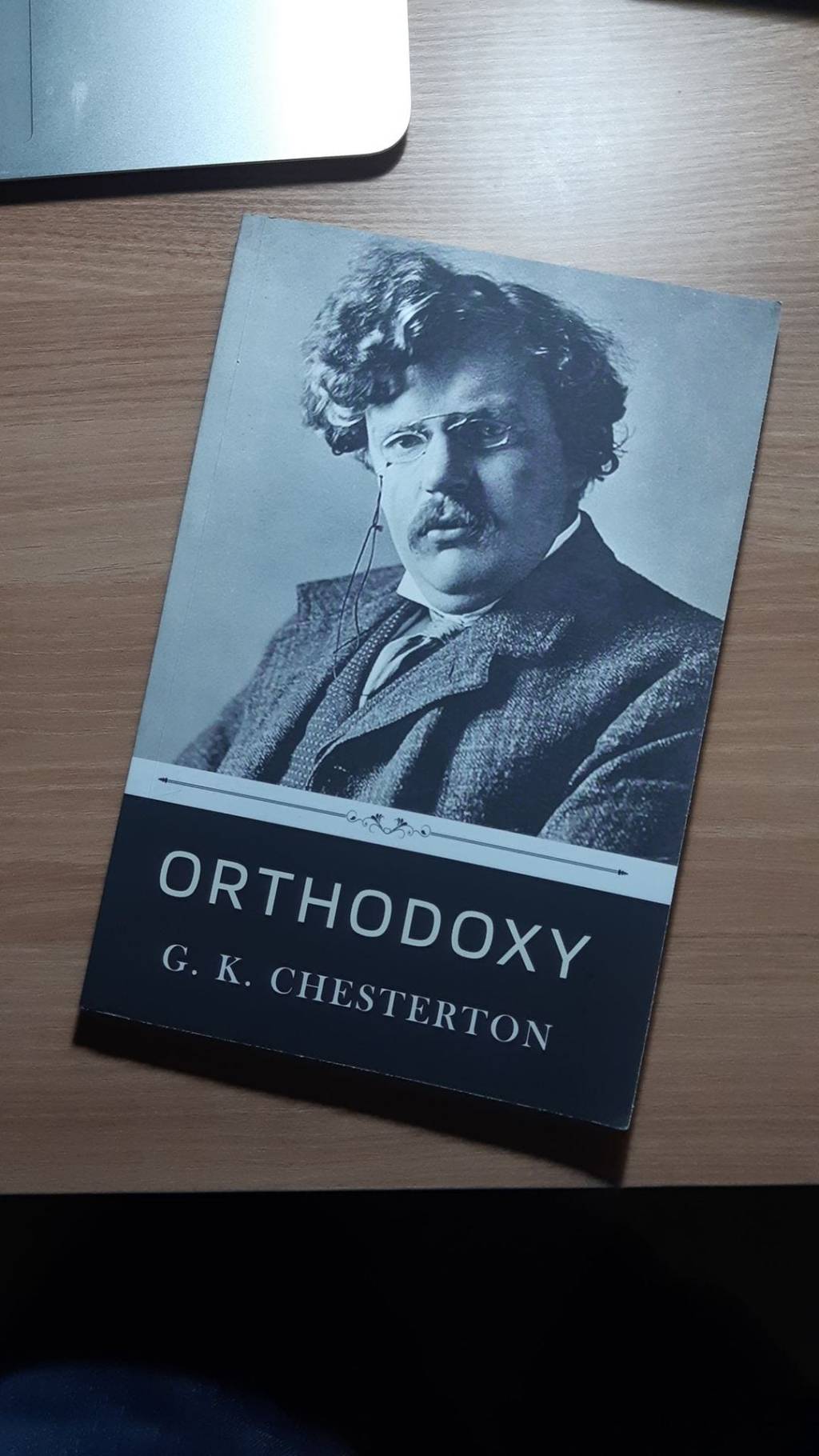
On the one hand, it is, in terms of its physical object, one of ugliest books that I have ever seen. Literally everything is wrong. The low res photo cover is trash. The paper is…well actually the paper is not bad. But most tragically, the height to width to thickness ratio is an absolute abomination. It’s far too skinny. Like barely more than a quarter-inch thick. It’s awful. Whenever I open it, I half expect to find comic panels inside. It is 9″x 6″. It should have been 6″x 4.5″ and at the same font size it would have been at least half an inch thick. I know an additional quarter inch thickness seems insignificant, but it makes all the difference. Half an inch feels like a book, if a short one. A quarter inch feels like a puffed up pamphlet.
On the other hand, the content is simply fantastic. When I was a teen, I read just about all the CS Lewis I could get my hands on, including a couple that were probably out of my depth (Abolition of Man comes to mind), but I’ve been rediscovering him over the last few months and I’ve just been blown away by how strong his style is. I’ve heard for a while now that Chesterton was an influence on Lewis, but aside from a single one of the Innocence of Father Brown stories (I just don’t have much interest in detective stories), I’d never read any of his serious work and just…wow. Chesterton’s prose gleams.
Where other philosophical books can try to conceal or obfuscate through linguistic vagaries and impenetrable verbiage, Chesterton conceals nothing. His arguments are effortless, straight forward, and unsophistical. Whenever I’m reading philosophy, one of the things that tends to get me “triggered” is when the author attempts to solve some logical conundrum by manipulating language or simply drawing arbitrary conditions under which these contradictions are supposedly alleviated. The example I’m thinking of is Fromm, who after spending 3/4 of his book attacking the idea of an individual submitting his will to some goal larger than himself (an illegitimate act of sado-masochism according to Fromm), then attempts to solve the problem of the isolated, atomized individual by saying that through “spontaneity” and creation, man could achieve unity with nature and the world of other people and suddenly it BECOMES legitimate. Really frustrating stuff, and it’s actually pretty common, but Chesterton almost never resorts to it and on the few occasions that he does, it’s in regard to ancillary points and never any primary concerns.
Orthodoxy is the story of how Chesterton discovered Christianity as the answer to the various philosophical problems that he encountered as a young intellectual. In his own words, he was man who left England in a little boat, got tossed in a storm, and came aground again in England, but without realizing it was England and thinking he had discovered something new, only to later realize his foolishness. It is less apologetics and more like a counter-strike.
It is not what I would call “serious” philosophy, and frankly, I’m happy that it is not. The more abstracted and alienated language becomes in the pursuit of answers to extremely esoteric philosophical questions, the more that I get the feeling that, if the “answers” posited to these questions are telling us anything, it is only something about our language, or at best, how our minds work. Chesterton’s writing is more beautiful than fastidious. Though he doesn’t shy away from analytical argument, he never strays too far from the heart and some passages are so heart-rending that, had I not been in a crowded Starbucks when reading them, I might have shed a tear.
Shockingly relevant (one might even go so far as to say “prophetic”) and gorgeously written, I am eager to read more by him.
***
“An almost unnatural vigilance is really required of the citizen because of the horrible rapidity with which human institutions grow old. It is the custom in passing romance and journalism to talk of men suffering under old tyrannies. But, as a fact, men have almost always suffered under new tyrannies; under tyrannies that had been public liberties hardly twenty years before…We have not any need to rebel against antiquity; we have to rebel against novelty. It is the new rulers, the capitalist or the editor, who really hold up the modern world. There is no fear that a modern king will attempt to override the constitution; it is more likely that he will ignore the constitution and work behind its back; he will take no advantage of his kingly power; it is more likely that he will take advantage of his kingly powerlessness, of the fact that he is free from criticism and publicity…It will not be necessary for any one to fight again against the proposal of a censorship of the press. We do not need a censorship of the press. We have a censorship by the press. This startling swiftness with which popular systems turn oppressive is the third fact for which we shall ask our perfect theory of progress to allow. It must always be on the look out for ever privilege being abused, for every working right become a wrong…the newspaper started to tell the truth now exists to prevent the truth from being told. Here, I say, I felt that I was really at last on the side of the revolutionary. And then I caught my breath again: for I remembered that I was once again on the side of the orthodox.”
***
“This is the last and most astounding fact about this faith, that it’s enemies will use any weapon against it, the swords that cut their own fingers, and the firebrands that burn their own homes. Men who begin to fight the Church for the sake of freedom and humanity end by flinging away freedom and humanity if only they may fight the Church…They burned their own corn to set fire to the church; they smashed their own tools to smash it; any stick was good enough to beat it with, though it were the last stick of their own dismembered furniture…The secularists have not wrecked divine things; but the secularists have wrecked secular things, if that is any comfort to them. The Titans did not scale heaven; but they laid waste the world.”
***
“For the whole modern world is absolutely based on the assumption, not that the rich are necessary (which is tenable), but that the rich are trustworthy, which (for a Christian) is not tenable. You will hear everlastingly, in all discussions about newspapers, companies, aristocracies, or party politics, this argument that the rich man cannot be bribed. The fact is, of course, that the rich man is bribed; he has been bribed already. That is why he is a rich man. The whole case for Christianity is that a man who is dependent upon the luxuries of this life is a corrupt man, spiritually corrupt, politically corrupt, financially corrupt. There is one thing that Christ and all the Christian saints have said with a sort of savage monotony. They have said simply that to be rich is to be in peculiar danger of moral wreck. It is not demonstrably un-Christian to kill the rich as violators of definable justice. It is not demonstrably un-Christian to crown the rich as convenient rulers of society. It is not certainly un-Christian to rebel against the rich or to submit to the rich. But it is quite certainly un-Christian to truth the rich, to regard the rich as more morally safe than the poor. A Christian may consistently say, “I respect that man’s rank, although he takes bribes. But a Christian cannot say, as all modern men are saying at lunch and breakfast, “a man of that rank would not take bribes.” For it is a part of Christian dogma that any man in any rank may take bribes.”
 The Barking Years
Leave a comment