Christ-baiting Is a Time-Honored Tradition
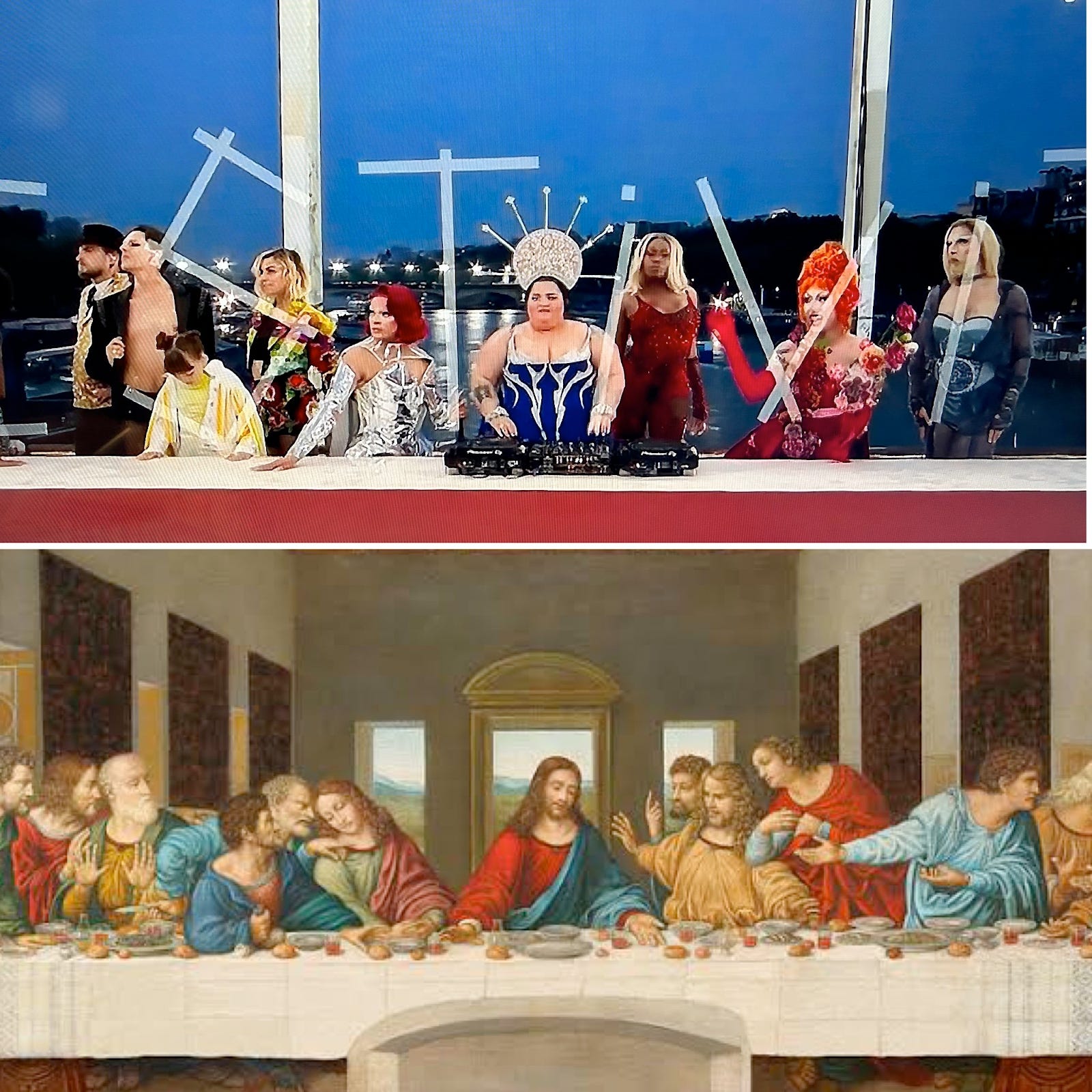
Well friends, the internet is in a tizzy again. In the last few days since the Olympics opening ceremony, people have been outraged that part of the ceremony involved a scene in which a group of drag queens had been organized so as to resemble Da Vinci’s painting “The Last Supper.” Luckily, some Christians have been good enough to step in and tell everyone that they are wrong to be upset by this. Specifically, Ben Cremer, in a Facebook post which I will be quoting in its entirety here ( or almost as it seems that there may have been some edits since I wrote this, but the arguments are basically unchanged).

Friends, can we think about the alleged Last Supper depiction at the opening ceremony of the Olympics and the outrage it has caused among Christians in our current context for a moment? First, let me remind you that my desire isn’t to tell you what to think, but my desire is to think with you about this. So I will be asking more questions than anything else.
Since I, like Ben, subscribe to the belief that people never misrepresent their intentions or say one thing while doing another or in any other way employ deceit…

…I will be taking this at face-value…for the moment.
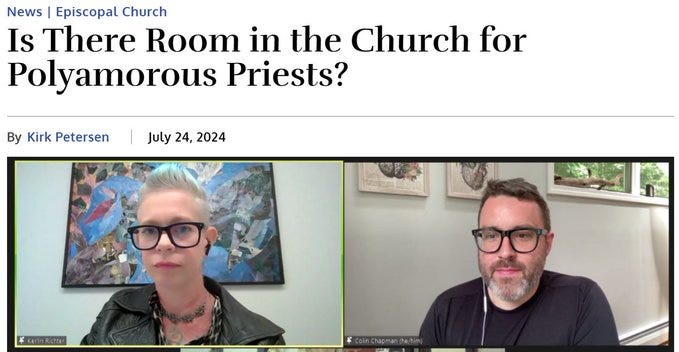
Indeed, Ben, let’s pay special attention to our current context. Let’s do even more than that: let’s look at our current context in the light of our historical context. A century ago, J. Gresham Machen published Christianity and Liberalism in which he argued compellingly that the Christian church was being infiltrated and subverted by liberal humanism. His arguments are too sophisticated (not to mention lengthy) to be reproduced here, but it is enough to note that he saw a future in which true Christians would be forced to either end this subversion and retake the Church, or break from the corrupted, apostate institution that still wore Christ’s name.
Since then, we have seen his predictions vindicated in stunning fashion. We have seen the church reduced to a vapid cheerleader for hedonic materialism, the therapeutic worldview, and the worship of the self. We have seen Christianity villainized by powerful institutions like the entertainment industry and the academy. And we have seen, in particular, a spectacular series of shocking heresies coming from the pulpit.
However, contrary to his own advice, Ben doesn’t mention any of this. I wonder why not.
The Last Supper painting by Leonardo da Vinci is a beautiful and iconic work of art. It is one of the most famous paintings and a quick google search will show you that it is one of the most reinterpreted pieces of art in the world. Yet, it is not part of the Christian cannon as say the Bible is nor is it part of the doctrines of the church. It is a work of art. How then should this reality influence how we see and respond to artistic reinterpretations of it in our world, especially by those whom we don’t know in another country? More importantly, the Olympic’s own X account said that it wasn’t actually a reinterpretation of the Last Supper (which is housed in Italy not France), but It was the Feast of Dionysus. The Greek God of festivity and feasting and ritual and theater. This would make sense as The Olympics are from Greek culture and tradition. French culture is deeply rooted in feasting and festivity and performing arts. So that is also an important detail to consider and look into further.
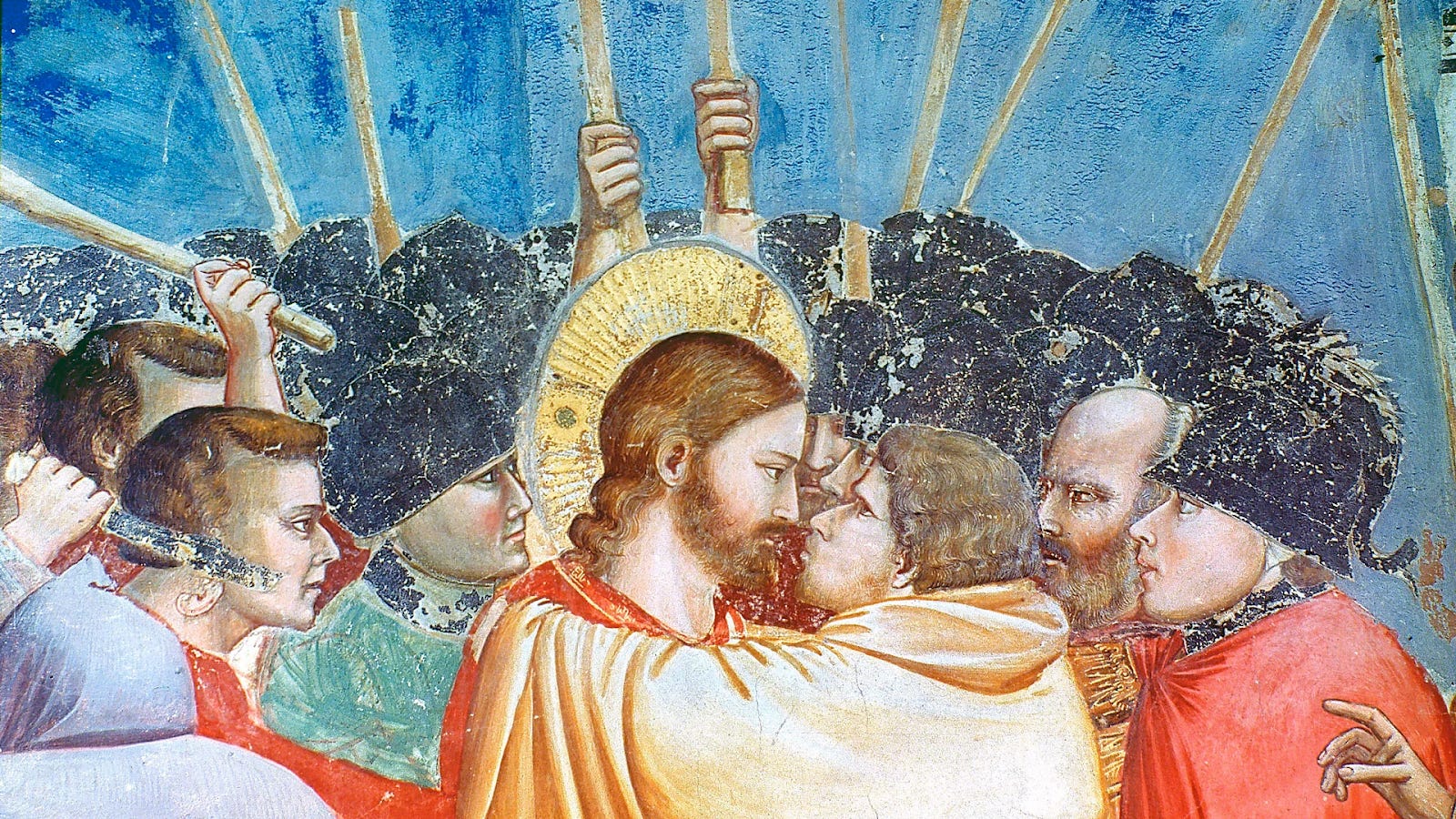
As I previously said, I am committed to the utterly inane position that people never lie. However, someone not so inclined to attach themselves to idiotic axioms might simply…oh I don’t know…use their eyes and realize that, regardless of whatever statement some PR rep makes, this is obviously aping Leonardo’s Last Supper. It is utterly transparent. The medieval styled halo adorning the central figure is telling as Jesus is often portrayed with a halo in much classical and medieval art.

Thomas Jolly, the director who staged this scene, is classically trained, well established in his field, and has taught at various national schools and conservatories. If you think that this man, who knows more about the visual arts than you ever will, put this scene together without at any point thinking “Gee, this looks a little like the Lord’s Supper,” then you can be made to believe anything.
Of course, the ambiguity is the point–to invoke the imagery and iconography, but still leave enough wiggle room to claim that there was no intent.
The claim that it is simply a generic representation of a feast as well as the juvenile and paper-thin rationalizations based on national culture are–to a non-idiot–a rhetorical shield meant to pull off the tried-and-true maneuver of invoking Christian outrage, while simultaneously muddying the waters sufficiently so that outrage seem ridiculous to the largely clueless public.
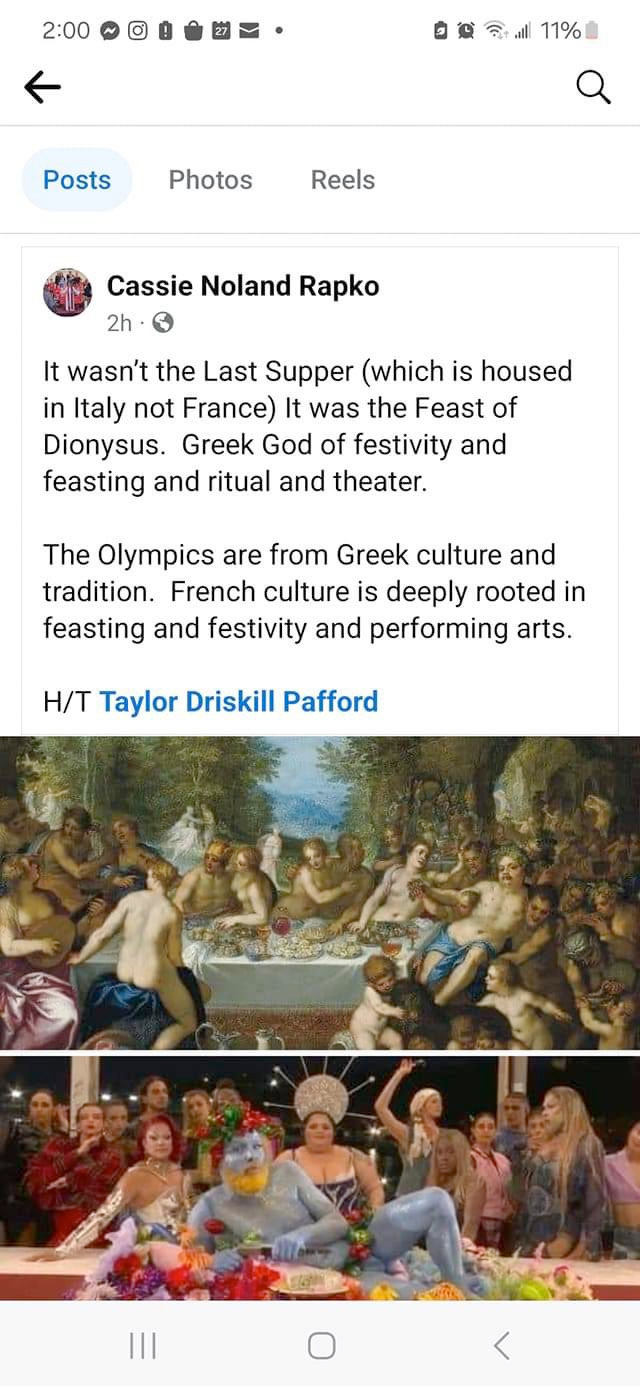
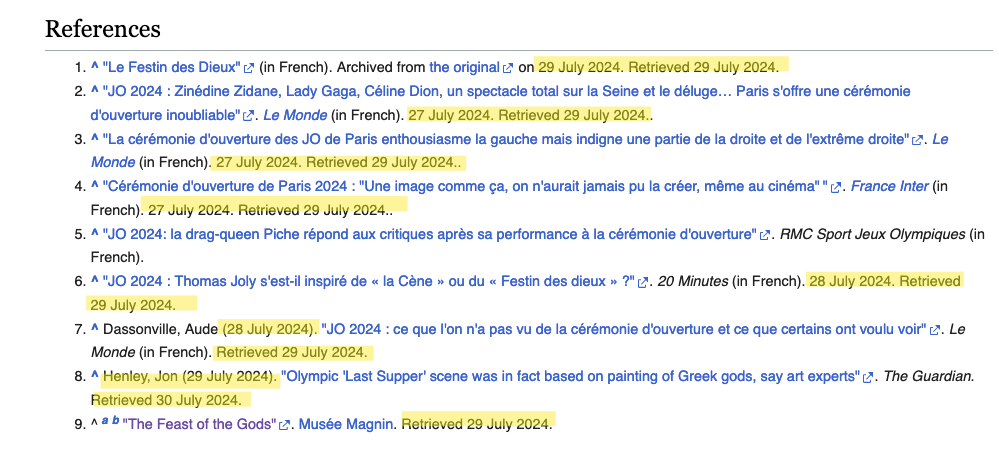
Since the scandal, there has been a mad scramble to find old oil paintings that are disconnected from Christianity but also resemble the Last Supper and Ben seems to have found a number to fit the bill, “The Feast of the Gods” (1635) by Jan Harmensz van Biljert, a painting so well-known that if you google it, Ben’s tweet talking about the thing is the first search result. Nice.
The second and third results are also responses to the controversy. Double nice. Apparently this is the most attention that Mr. Biljert (yes, I know that “van” means “from”) has received since…well, ever! But yes, I’m sure that this jackass …

…was only thinking about a virtually unknown work from a virtually unknown painter when he put the scene together.
Edit: It seems that Google has since fixed this (boy they do work fast don’t they?) and the top result now goes to a Wikipedia page for the painting, a page that evidently did not exist prior to this week since all of the references come from the last few days. But it does provide a good illustration of post hoc narrative building in real time.
Yes, The Last Supper is not a part of “Christian canon,” nevertheless it is a work meant to glorify and give sensual reality to Christianity, something that was understood by everyone until only yesterday. It was made for believers and for a believing culture, and when considering how one should interpret its use in this context (or any other), it does not matter at all where the thing is made, what anyone’s skin color is, or any other frivolous nonsense. It matters entirely what they believe. And the beliefs of the creators here are again, crystal clear: the subordination of Christianity to the cult of the Self (draped in the iconography of hedonic materialism a la the blue Dionysus figure). Carl Truman has examined this tension with astonishing depth in The Rise and Triumph of the Modern Self.
Rather than addressing the context of this event, Cremer’s careful skepticism requires a carefully studied ignorance to the innumerable examples of similar subversions that have blighted our screens in recent years, but I’m repeating myself.
Now let’s take a look at ourselves. How many politicians have used Christianity for the sake of their own political control in our country? How many politicians have attempted to mandate and legislate Christianity in our country just in the last few months alone, like in Louisiana and Oklahoma? How often have we seen the Bible itself draped in the American flag and even sold by a presidential candidate for the sake of political influence? How many paintings and memes have we seen just this election season alone of Jesus or angels with presidents, tying them together with political power? How many flags, hats, and t-shirts have we seen that exclaim “Jesus is my savior and __ is my president!”? How many pictures of Jesus with a gun have you seen in our country? What has been the Christian response to these things?
This is the part of the act (predictable by now) where Cremer invokes the specter of “Christian nationalism.” I’ve received a comment on a prior post about Cremer (there are only two at this point) in which the author asked me about the “evils of Christian nationalism.” I never responded because I was simply too annoyed by the inanity of the subject.
Christian nationalism discourse comes front loaded with so much absurdity and ignorance that the task of debunking it is like trying to take down a retarded hydra. One can chop down all of the individual components of the argument over and over again with little difficulty, but somehow in the mind of the Christian-nationalist-fearing hysteric, the beast is never vanquished.
Yes, in a DEMOCRACY politicians will make appeals to the values and principles of the demos. When large portions of that demos are Christians, politicians will make Christian appeals. This. is. how. we. designed. it. genius.
Cremer, and the other David-French-types like him, would like for Christians to believe that they are a group unlike any other that has ever existed. They are the one group of people that is forbidden from actually using the political apparatus built by their Christian forefathers, based on Christian principles, to fulfill their Christian vision of what society on Earth ought to look like. Instead, they must commit themselves to abdicating political power at every turn, even to use it for their own protection in an increasingly hostile culture. Christians can’t vote or perform politics according to their morality because their morality comes from the Bible and “don’t you know that we’ve got separation of church and state in America????” This at least is how the issue appears to the mind of a simpleton.
In reality, all morality and therefore all law comes from sources which are either explicitly religious or religious in character. Everyone who performs politics, uses these values to inform their politics. To suggest that Christians cannot do this is to suggest that they are the one group within democracy which is forbidden from doing what everyone else does: using the political machinery of democracy to pursue their vision of what society should look like. This sophistry is obscene and should be viciously mocked wherever it raises its malformed head. The founders would be utterly dumbfounded if they could bear witness to such a perversion of their system, and those who advocate for it should be derided as the absurd muppets they are.
All that said, I don’t have any affection for the gaudy amalgamations of red-state politics and Christianity that Ben points out, but much of this ends up just being criticism of people from less-than-advantaged circumstances. Yes, many people may express their love for Christ and country in crude and embarrassing ways, but in many respects they are just the victims of the stupid consumer culture that churns out this garbage, and if it were all to vanish from the face of the Earth, I would rejoice.

BUT there is a world of difference between simply being déclassé and being directly and intentionally subversive. And it is a distinction that actual Christians would do well to pay attention to.
These questions could go on and on, but can you see how our outrage towards people in another country for what we think to be a misuse of Christianity can express a deep lack of awareness of our own misuse of it in our country?
Actually, Ben, we don’t agree on what constitutes “misuse” of Christianity because it appears to me (based on my limited experience of literally every word I’ve ever seen you write) that you consider anything that actually secures the spread of Christianity rather than christian-flavored Liberalism to be flawed.
The words from Jesus in Matthew 7:3-5 came to mind this morning as I logged onto social media: “Why do you look at the speck of sawdust in your brother’s eye and pay no attention to the plank in your own eye? How can you say to your brother, ‘Let me take the speck out of your eye,’ when all the time there is a plank in your own eye? You hypocrite, first take the plank out of your own eye, and then you will see clearly to remove the speck from your brother’s eye.” -Matthew 7:3-5 NIV
The Word of God is always beautiful and good for instruction, but surely anyone capable of tying their own shoes can tell that the rhetorical function of these paragraphs is to turn the reader’s eye away from the obvious subversion of Christianity coming from the political Left, something which has long since spread beyond national boundaries, and get them to focus on the conservative-coded examples of “misuses” of Christianity. Surely anyone can tell what the game is by now. If someone can point me to an instance of Cremer actually taking aim at the progressive Left for…well anything other than not being progressive left enough (even a token effort would suffice), I’ll eat my shoes.
Again, you are free to feel whatever you do about art. That’s the point of art! But I just think there needs to be a lot less suspicion and offense and a lot more pondering and self reflection in this moment among Christians in the United States about how our faith is being used and misused among ourselves right now.
I know that I said that I would commit myself to the idea that all people are completely on the level at all times, but maintaining the joke is more trouble than it’s worth at this point. I am not good at offering grace (especially when faced with such obvious deceit), but I will try my best to extend what grace I can to Ben. It is possible that Ben is, beneath his rhetoric and sophistry, a decent man. Nevertheless, it is high time someone pointed out what Ben’s functions are in this discourse.
In essence, there are two:
- For those who are not in agreement with Ben, his posts serve to force people who are not accustomed to dialectic to have to defend their beliefs in ways that they are not trained to. There are, as I have shown here, answers for any one of the questions that Ben has posed, but the average person who saw what they saw and went to social media, is not likely to have the background knowledge or the familiarity with rhetorical frame games to respond to Ben’s statements effectively. They may try, and when they do, they will make numerous mistakes, mistakes which their ideological opponents will be quick to point out and embarrass them over. And that’s the point: to muddy the water, to make people question what they know is true because they may not be capable of articulating the reasons for it, and to threaten them with the possibility of social shame if they try and fail.
This dynamic has played out billions of times across numerous social media platforms. Person A writes something expressing their discomfort, concern, or anger at some progressive vandalism of the faith. Person B then comments, challenging Person A and linking or pasting (maybe even in its entirety) a post from Cremer or someone like him. And then the circus can really get started. When Person A tries to respond, they can more or less rest assured that other people will chime in with contributions of greater or lesser stupidity and aggressiveness. The argument will likely turn into a dogpile, and aside from a very tiny minority, nobody enjoys that kind of thing. - Secondly, Ben’s rhetoric is meant for other Christian progressives, and the goal is to ensure that their eyes are eternally fixed on the “evils” of conservatism. Above all, they must never be allowed to face or even become aware of the contradictions between progressivism and Christianity. Their position in the progressivism political coalition can only be maintained by carefully keeping these contradictions out of their sight. Otherwise, they would have to make a choice. And at least some of that number (maybe not a lot but some) would realize that they are Christians first and that their Christianity is actually in the process of being consumed by this parasitical progressivism, which is merely a secularized and hollow Christian morality divorced from the Christian mythos.
While I don’t have time to do it now, I think there is a strong argument to be made that, while those like Ben Cremer frame themselves as the true defenders of Christianity against the political machinations of “fake” Christians, this is simply another case of “accuse your enemy of that which you are doing yourself.”
The assertion is that Christian nationalists are polluting the Gospel by trying to move their beliefs outside of the realm of pure faith, but is this not a more accurate description of Christian progressives who refer to Christian principles whenever they want to propose an expansion of the welfare state, etc., etc?
The Bible says to care for the poor, so we should legislate charity and “redistributive justice.”
The Bible says not to blaspheme or engage in sexual perversion, but we’ve got separation of church and state.
Witness enough of these cases, and an honest observer will have to admit that the revealed preference for these characters doesn’t appear to be Christianity or the God of Abraham. Their vision of the Highest seems much more like the Popperian open, pluralistic society, or perhaps communism?? Wouldn’t be the first time.
Again, this debate is too deep, and I’m trying to wind this thing down, but I think there’s fertile ground for examination in that direction, and I’m certain plenty have beaten me to it. I’m just a guy on the internet, and this has been me being mean to Ben Cremer…again.

 The Barking Years
Leave a reply to The Problem with Ben Cremer – The Barking Years Cancel reply